Key Takeaways
- India had 1,04,125 single-teacher schools in 2024-25, serving more than 33.7 lakh students.
- Andhra Pradesh recorded the highest number of single-teacher schools, while Uttar Pradesh had the highest student enrolment.
- Uttar Pradesh and Madhya Pradesh have shown a decline in single-teacher schools amid wider rationalisation efforts.
The number of schools operating with only one teacher has shown a mixed trend across Indian states, with Uttar Pradesh and Madhya Pradesh recording a decline, while Andhra Pradesh continues to report a high number of such schools, according to education data.
The latest figures highlight persistent disparities in teacher availability despite efforts to improve pupil-teacher ratios and rationalise school infrastructure.
According to Ministry of Education statistics for the 2024-25 academic year, 1,04,125 schools across India were operating with a single teacher, catering to 33,76,769 students. This works out to an average of around 34 students per single-teacher school.
Andhra Pradesh recorded the highest number of single-teacher schools at 12,912, followed by Uttar Pradesh with 9,508 and Jharkhand with 9,172. Madhya Pradesh had 7,217 such schools.
However, the distribution of students tells a different story. Uttar Pradesh had the highest enrolment in single-teacher schools, with 6,24,327 students, followed by Jharkhand with 4,36,480. Madhya Pradesh had 2,29,095 students and Andhra Pradesh 1,97,113 students enrolled in such schools.
The broader trend indicates that the number of single-teacher schools has been falling nationally. It declined from 1,18,190 in 2022-23 to 1,10,971 in 2023-24, before reaching 1,04,125 in 2024-25.
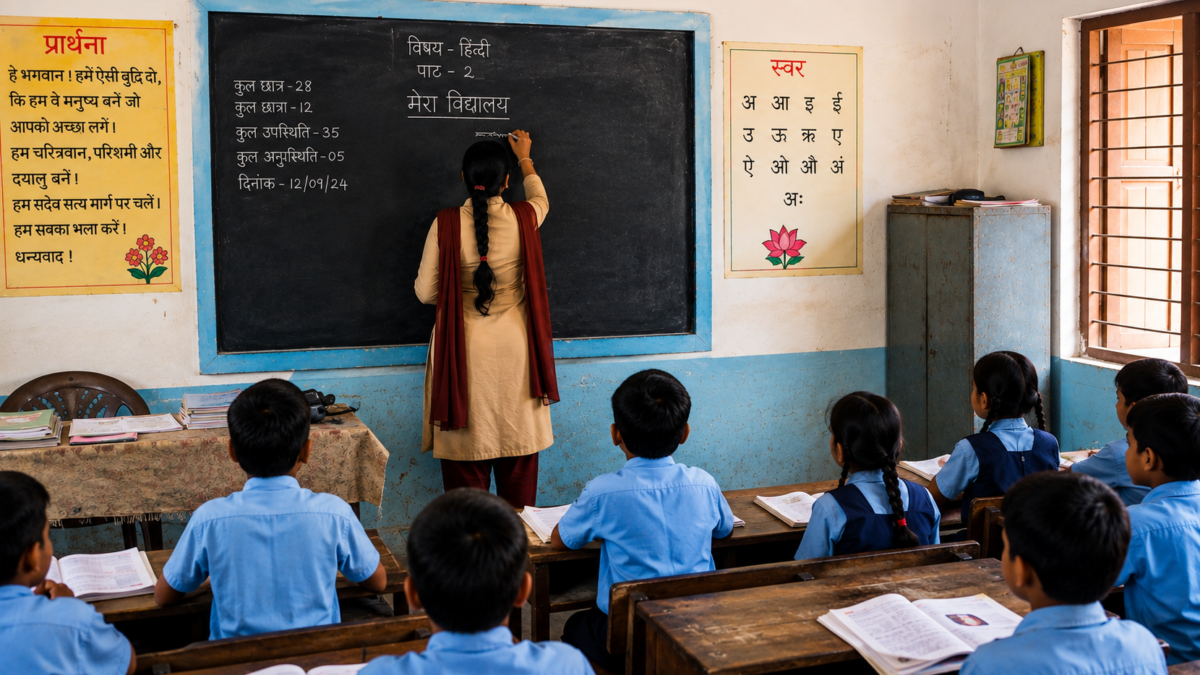
Under the Right to Education Act, the prescribed pupil-teacher ratio is 30:1 for primary classes and 35:1 for upper-primary classes. Single-teacher schools can make it difficult for one educator to manage different grades and subjects simultaneously.
The Education Ministry has said that school mergers, consolidation and teacher redeployment are being used to improve resource utilisation and learning outcomes. Teachers from schools with zero enrolment are also being considered for redeployment to schools facing teacher shortages.
The data therefore presents a contrasting picture: while the national number of single-teacher schools is declining, several states continue to face significant staffing gaps. The challenge remains particularly important in ensuring that students in smaller and rural schools have adequate access to teachers and quality classroom instruction.