Key Takeaways
- Rural employment fell 49.94% year-on-year in July 2026.
- VB-G RAM G generated 7.67 crore person-days during its first month.
- The new scheme guarantees 125 days of employment per household annually.
Quick Facts
- 7.67 crore person-days generated
- 49.94% year-on-year decline
- VB-G RAM G began July 1
- Guarantee increased to 125 days
Rural employment falls sharply
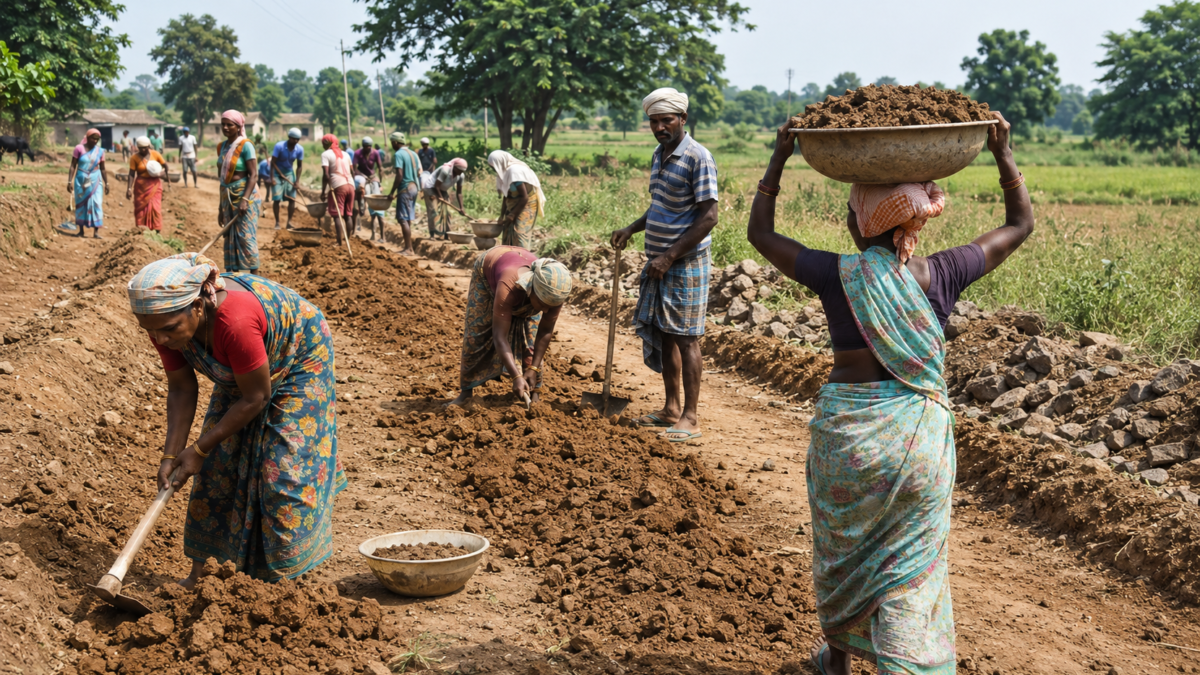
Rural employment generation fell by nearly 50% year-on-year in July 2026, the first month after the Viksit Bharat–Guarantee for Rozgar and Ajeevika Mission (Gramin), or VB-G RAM G, replaced MGNREGA.
According to data available as of August 9, around 7.67 crore person-days of employment were generated in July 2026, compared with 15.33 crore person-days under MGNREGA in July 2025. This represents a 49.94% decline.
July figures lowest in five years
The July figures were the lowest in five years for both households receiving employment and person-days generated, according to the report.
The decline comes despite VB-G RAM G increasing the statutory employment guarantee from 100 days to 125 days per rural household in a financial year.
VB-G RAM G replaces MGNREGA
The VB-G RAM G Act came into force across the country on July 1, 2026, replacing MGNREGA.
The new scheme aims to provide rural households with wage employment while also linking works to rural infrastructure and development.
The Centre has allocated ₹95,692 crore for the scheme for 2026-27.
Government and Opposition responses
The Centre has highlighted the increase in the guaranteed employment period from 100 to 125 days as a key feature of the new framework.
However, the sharp fall in July employment has drawn criticism from the Opposition, which has raised concerns about the availability of rural work following the transition from MGNREGA.
Further monthly data is expected to show whether the July decline was linked to the transition to the new scheme or reflects a broader fall in rural employment demand.v